
Web Hosting vs Web Maintenance: What’s the Difference?
If you’ve ever had a website built, or you’re planning one, you’ve probably heard terms like web hosting and web maintenance used as though they mean the same thing. They don’t. Web hosting and website maintenance are two separate services, and understanding the difference can save your business from unexpected costs, downtime, security problems, and emergency repairs later.
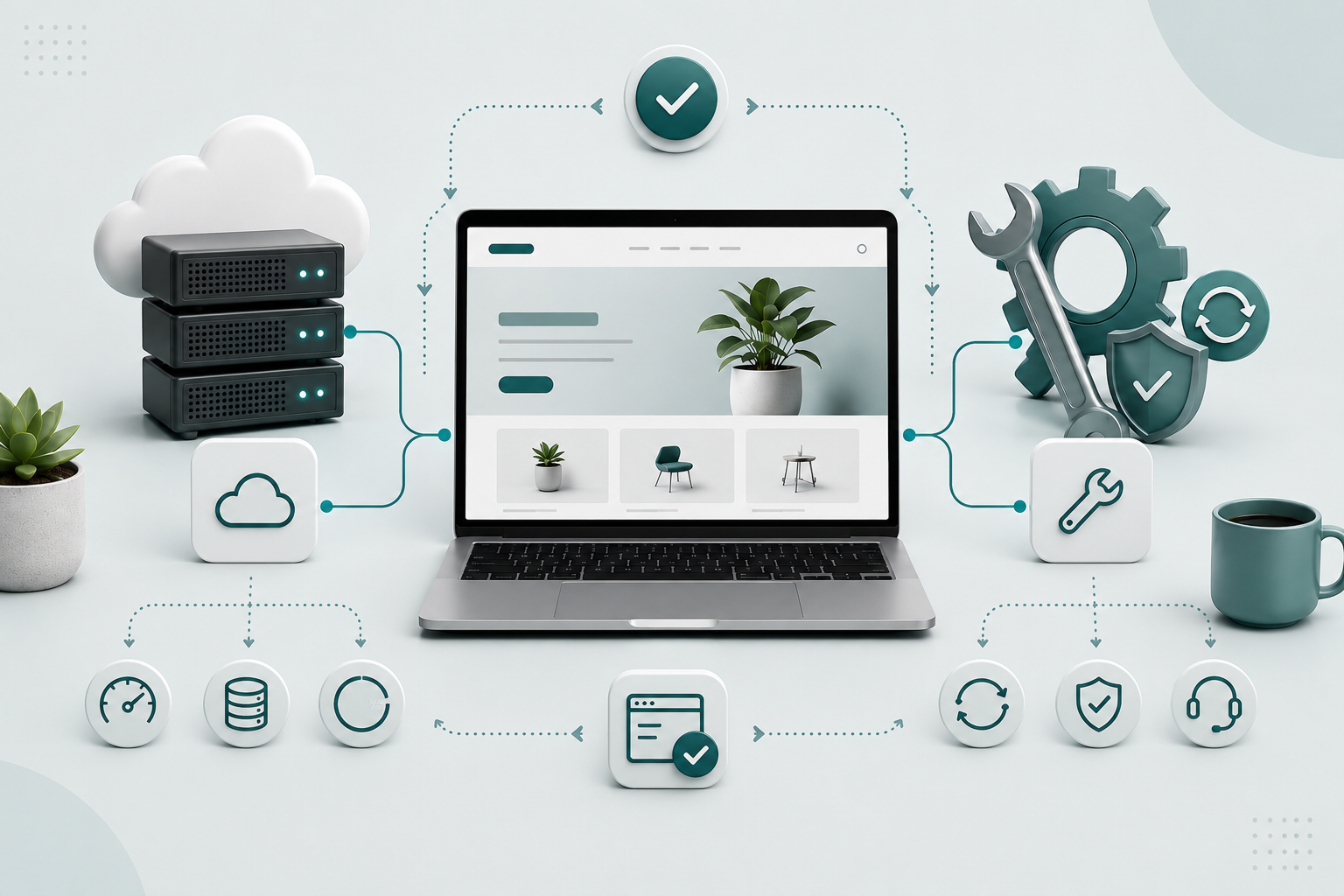
In simple terms, website hosting keeps your website online, while website maintenance keeps it secure, updated, fast, and working properly. Let’s look at the difference between web hosting and web maintenance, what each service includes, and why most businesses need both.
What Is Web Hosting?
Web hosting is the service that stores your website files and makes your website accessible on the internet.
Think of your website like a house:
- Your website files, pages, images, and code are the structure and contents of the house.
- Your web hosting is the land the house stands on.
- Your domain name is the address people use to find it.
Without website hosting, your website cannot be accessed online. A hosting provider supplies the server infrastructure needed to store your website and deliver its pages to visitors when they enter your domain name.
What Does Website Hosting Typically Include?
Most website hosting packages include:
- Server space for your website files
- Database support
- Website uptime
- Server-level security
- Bandwidth for website traffic
- Email hosting in some packages
- SSL certificate support
- Technical server management
The exact features depend on the provider and type of hosting plan you choose.
It is important to understand that hosting providers generally maintain the server itself. They do not necessarily provide ongoing website support, update your plugins, fix broken pages, or monitor the health of your WordPress installation.
Common Types of Web Hosting
Different websites require different levels of hosting performance and flexibility.
Shared Hosting
Shared hosting places multiple websites on the same server. It is usually the most affordable option and may be suitable for smaller websites with limited traffic. However, server resources are shared, so the performance or security problems of another website can sometimes affect your own.
VPS Hosting
Virtual Private Server hosting provides more dedicated resources and greater control than shared hosting. It is often suitable for growing businesses, eCommerce websites, and websites that need improved performance or custom server settings.
Dedicated Hosting
Dedicated hosting gives one business access to an entire physical server. This provides high levels of control and performance but usually comes with a significantly higher cost and greater technical responsibility.
Cloud Hosting
Cloud hosting distributes website resources across multiple servers. This can improve scalability, reliability, and uptime, particularly for websites that experience changing traffic levels.
Managed WordPress Hosting
Managed WordPress hosting is designed specifically for WordPress websites. It may include server-level caching, WordPress-specific security measures, staging environments, and some automated updates.
However, managed WordPress hosting is not always the same as a full WordPress maintenance service. The provider may manage the hosting environment without handling website content changes, plugin conflicts, broken functionality, or custom technical support.
What Is Web Maintenance?
Web maintenance is the ongoing work needed to keep your website secure, updated, functional, and performing properly. If web hosting is the land your website sits on, web maintenance is the work required to keep the building in good condition.
That includes activities such as:
- Repairing broken functionality
- Keeping software updated
- Monitoring security
- Creating backups
- Improving speed
- Fixing technical issues
- Updating website content
Without regular website maintenance, a website can become slower, more vulnerable, and increasingly difficult to manage over time.
What Do Website Maintenance Services Include?
Professional website maintenance services may include a combination of the following:
WordPress Core, Plugin, and Theme Updates
WordPress websites rely on the WordPress core platform, themes, and plugins.
These components are regularly updated to address:
- Security vulnerabilities
- Compatibility issues
- Software bugs
- Performance problems
- New features
A proper WordPress maintenance process involves more than clicking an update button. Updates should be monitored and checked to ensure they do not break the website or cause conflicts.
Security Monitoring
Website security monitoring helps identify suspicious activity, malware, login attacks, file changes, and other potential threats.
This can include:
- Malware scans
- Firewall monitoring
- Login protection
- Vulnerability checks
- User account reviews
- Spam protection
Website hosting may provide server-level security, but it does not automatically protect every plugin, theme, user account, or application-level vulnerability on your website.
Website Backups
Regular backups allow your website to be restored if something goes wrong.
Backups are especially important when:
- A website is hacked
- An update breaks functionality
- Files are accidentally deleted
- A database becomes corrupted
- A hosting problem causes data loss
A good website maintenance plan should include reliable, regularly tested backups stored separately from the live website.
Performance Optimisation
Website maintenance may also include ongoing speed and performance improvements.
This can involve:
- Image optimisation
- Caching configuration
- Database cleanup
- Script reduction
- Plugin audits
- Core Web Vitals improvements
- Mobile performance checks
Website speed affects user experience, conversion rates, and search engine visibility.
Bug Fixes and Technical Support
Websites can develop issues over time because of browser updates, software changes, plugin conflicts, hosting changes, or user errors.
Ongoing website support may include fixing:
- Broken contact forms
- Layout problems
- Missing images
- Broken links
- Checkout errors
- Mobile display issues
- Plugin conflicts
- Website errors
Content Updates
Some website maintenance services include content changes such as:
- Updating text
- Uploading images
- Adding blog posts
- Editing service pages
- Changing contact details
- Adding team members
- Updating products or prices
This is separate from the server function provided by website hosting.
The Key Difference Between Web Hosting and Web Maintenance
The easiest way to remember the difference is:
Web Hosting = Storage and Online Access
Website hosting provides the server that stores your website and makes it accessible to visitors.
Web Maintenance = Updates, Security, Support, and Improvements
Website maintenance keeps the website itself secure, updated, fast, functional, and aligned with your business needs. You can have website hosting without website maintenance, but doing so increases the risk of security issues, broken functionality, and poor performance.
You cannot have website maintenance without hosting because there would be no live website to maintain.
Why Do People Confuse Hosting and Maintenance?
Many business owners assume:
“I pay for website hosting, so my website should already be taken care of.”
Unfortunately, that is not usually how hosting works.
Most hosting companies focus on maintaining the server infrastructure. They generally do not:
- Update your WordPress plugins
- Test your website after updates
- Fix broken forms
- Improve page layouts
- Update your website content
- Resolve plugin conflicts
- Monitor user accounts
- Optimise your website for SEO
- Investigate conversion problems
Even with reliable web hosting, your website can still:
- Get hacked
- Become infected with malware
- Break after a plugin update
- Load slowly
- Display incorrectly on mobile devices
- Lose search visibility
- Stop generating enquiries
Hosting keeps the server running. Website maintenance keeps the website healthy.
What Happens If You Only Pay for Website Hosting?
If you only pay for hosting and do not invest in regular website maintenance, problems may slowly build up without being noticed. Over time, you may experience:
Security Vulnerabilities
Outdated WordPress plugins, themes, and core files can expose your website to known security vulnerabilities. Automated bots continuously scan websites for weaknesses, and smaller business websites are not exempt.
Slow Website Performance
Unoptimised images, outdated plugins, bloated databases, and unnecessary scripts can make your website slower over time. This affects visitor satisfaction, conversions, and SEO performance.
Broken Forms and Features
Website functionality can break because of updates, compatibility issues, or changes to third-party tools. If forms, checkout pages, booking systems, or enquiry buttons stop working, your business may lose leads without realising it.
Declining Google Rankings
Poor speed, broken links, security issues, outdated content, and technical errors can negatively affect search visibility. Ongoing WordPress maintenance helps identify and address these problems before they cause more serious SEO damage.
Higher Emergency Repair Costs
Routine maintenance is usually more affordable than emergency repairs. A neglected website may eventually require malware removal, website recovery, plugin replacements, or extensive technical troubleshooting.
Do Small Business Websites Need Maintenance?
Yes. Small business websites still need regular website maintenance.
In fact, smaller websites are often more vulnerable because they may have:
- Outdated plugins
- Weak passwords
- No security monitoring
- No tested backup system
- Unused admin accounts
- Old themes
- Limited technical oversight
Even if you rarely change your website content, the software behind the website continues to age. WordPress, plugins, themes, hosting environments, browsers, and security threats all change over time. A website does not remain secure and functional simply because nobody is editing it.
Do You Need Website Hosting?
You need website hosting if:
- You want your website to be online
- You need a server to store your website
- You want visitors to access your site
- You want domain-based email hosting
- You are running WordPress or another content management system
Every live website requires some form of hosting.
Do You Need Website Maintenance?
You need website maintenance if:
- Your website is built with WordPress
- Your business depends on enquiries or online sales
- You want your website to remain secure
- You need reliable backups
- You want ongoing website support
- You do not want updates to break the website
- You want your website to remain fast
- You want to protect your search rankings
- You want technical problems handled promptly
For most business websites, maintenance is not simply an optional extra. It is part of protecting an important business asset.
Is Managed WordPress Hosting the Same as WordPress Maintenance?
Not always.
Managed WordPress hosting usually focuses on the hosting environment and may include:
- WordPress-compatible servers
- Server caching
- Automated backups
- Staging tools
- Basic malware scanning
- Core WordPress updates
A dedicated WordPress maintenance service may go further by providing:
- Manual update testing
- Plugin and theme management
- Website troubleshooting
- Security reviews
- Performance improvements
- Content changes
- Technical support
- Recovery assistance
- Website monitoring
Before choosing a provider, check exactly what is included. The word “managed” does not automatically mean that every part of your website is being monitored or maintained.
Best Practice: Combine Hosting and Website Maintenance
The most reliable setup for most businesses is:
- Dependable website hosting
- Ongoing website maintenance services
- Regular backups
- Security monitoring
- Performance optimisation
- Access to technical website support
Together, these services help keep your website:
- Online
- Secure
- Updated
- Backed up
- Fast
- Functional
- Supported
- Ready to grow with your business
Using one provider for both hosting and maintenance can also simplify communication because there is less confusion about who is responsible when a problem occurs.
Final Thoughts
Web hosting and web maintenance are not the same service, but both are essential to the long-term health of a business website. Hosting gives your website a place to live. Website maintenance keeps it secure, functional, fast, and up to date.
Reliable hosting alone cannot prevent every website problem. It does not replace software updates, backups, security monitoring, bug fixes, performance improvements, or ongoing website support. A business website is not a once-off project. It is an active digital system that requires regular care.
For most businesses, the best approach is to combine reliable website hosting with professional website maintenance services so the website remains stable, protected, and capable of supporting long-term growth.